Tiny Black Bugs Look like poppy seeds | PRO Information
Introduction
In the realm of pest identification, tiny black bugs that resemble poppy seeds can be particularly perplexing. These diminutive creatures can invade homes, gardens, and other environments, causing concern and confusion. In this comprehensive guide, we will delve into the various types of tiny black bugs that might be mistaken for poppy seeds, their characteristics, habitats, and effective management strategies.
Types of Tiny Black Bugs
1. Springtails
Springtails are tiny, wingless insects that are often found in moist environments. Measuring less than 1/16 inch in length, these bugs can appear black or dark gray, leading to their mistaken identity as poppy seeds. They are known for their unique ability to jump great distances relative to their size.
Characteristics:
- Size: Less than 1/16 inch
- Color: Black, dark gray, or brown
- Habitat: Moist areas, soil, decaying organic matter
Management:
- Reduce moisture levels in affected areas
- Improve ventilation in basements and bathrooms
- Use dehumidifiers to maintain dry conditions
2. Fungus Gnats
Fungus gnats are small, dark insects that can be found around indoor plants. The adults are often mistaken for poppy seeds due to their size and color. The larvae feed on fungi and organic matter in the soil, which can damage plant roots.
Characteristics:
- Size: Adults are about 1/8 inch
- Color: Dark brown to black
- Habitat: Indoor plants, soil rich in organic matter
Management:
- Allow the soil to dry between waterings
- Remove decaying plant material from the soil surface
- Use sticky traps to capture adult gnats
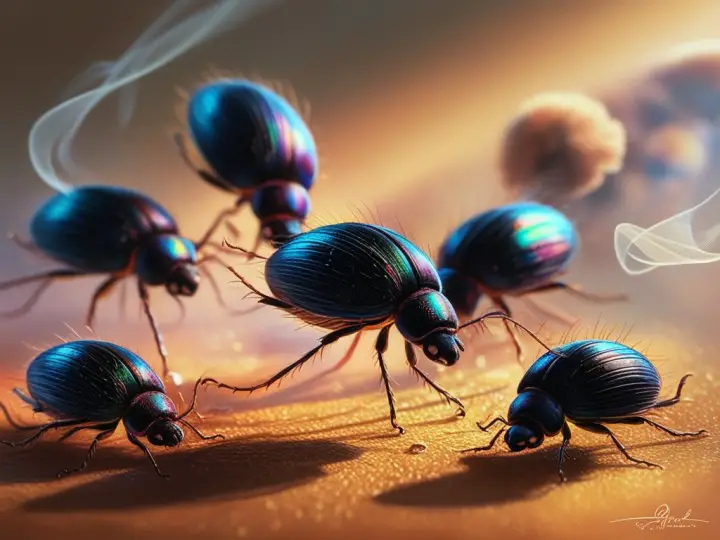
3. Carpet Beetles
Carpet beetles are another group of tiny black bugs that can resemble poppy seeds. These pests are notorious for damaging fabrics, carpets, and stored products. The larvae are particularly destructive, feeding on natural fibers.
Characteristics:
- Size: Adults are about 1/8 to 1/4 inch
- Color: Varied, often with dark patterns
- Habitat: Fabrics, carpets, stored products
Management:
- Regularly vacuum carpets and upholstered furniture
- Store clothes and textiles in airtight containers
- Use insecticides specifically designed for fabric pests
Comments
Post a Comment